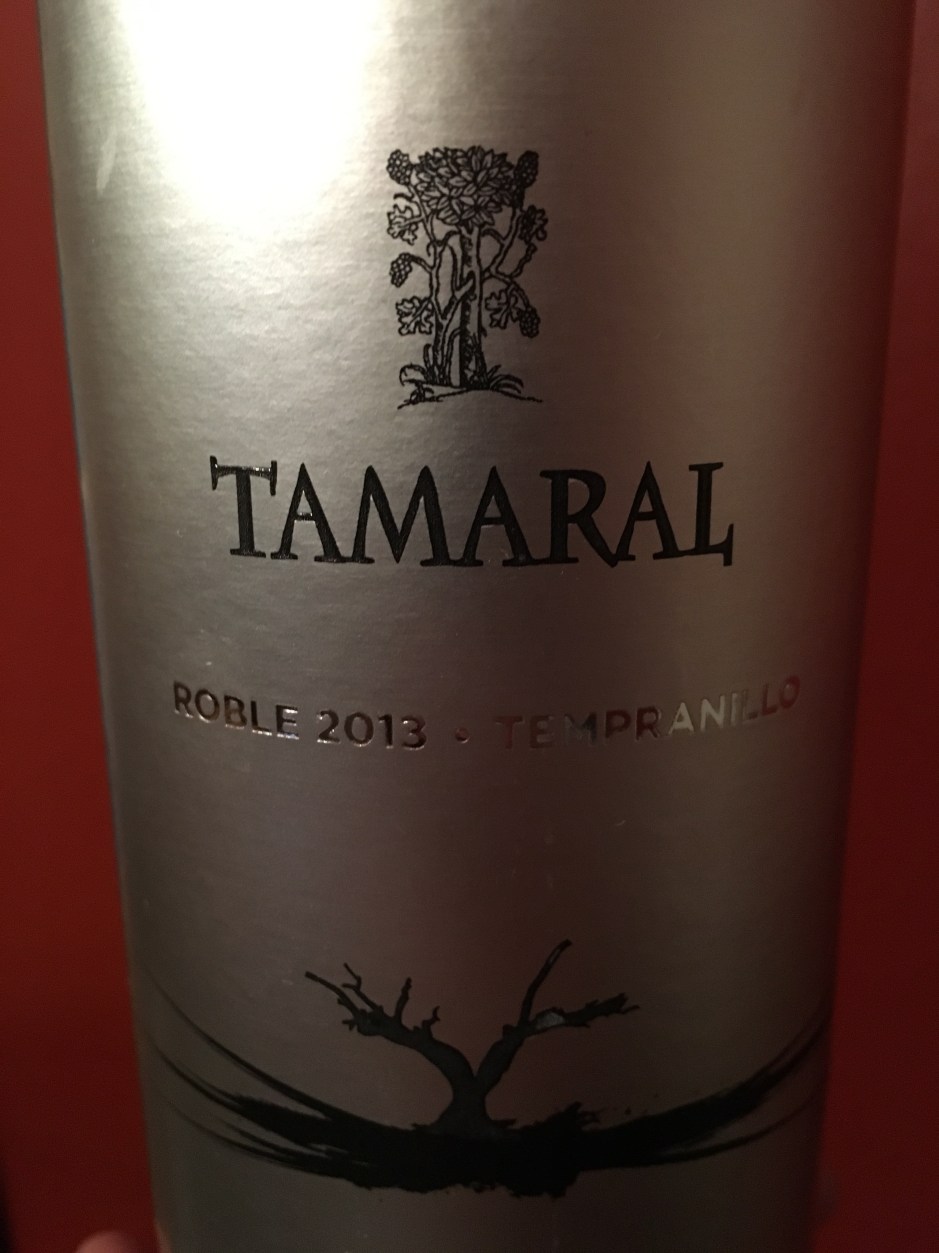
Fresh blackberry and currant on the nose, with faint nutmeg spice. Violets and dark berries, laced with a faint strain of vanilla come together to finish with a solid, abrupt tannin finish. A chewiness, with peppercorns and aromatic herbs, lingers after the finish. A nifty little wine, well balanced and nimble, how a Mazda Miata might compare to a Ferrari.
I heard about this place from a friend who had recently passed through San Sebastián. It had been a good twelve years since I’d been through the gorgeous Basque fishing town and its horseshoe bay. But the food I remembered well. Years ago I had my local spot where I would get a late breakfast of mussels and cava, before going to sleep for a bit out on the beach. Sublime.
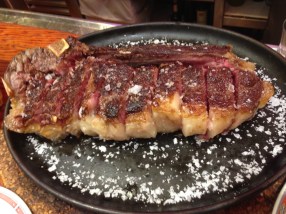
Chuleta de buey
At Bar Nestor questions are kept to a blessed minimum, and the answer is always “sí!” Do you want chuleta? Of course. Do you want tomatoes? That’s not a real question. Will you have peppers? You’re no fool. The only real question to ponder is what wine you will choose, and they do have a selection. One thing to keep in mind for those inclined to order a bottle: in English we might use the words “powerful” or “strong” to refer to a big-flavored or robust wine. In the Spanish wine lingo of Spain, the word “fuerte” (i.e. strong or powerful) actually refers to the tannins. A fuerte wine will have a lot of tannin. I learned this the hard way by expecting a powerful and robust red to accompany my chuleta, but ending up with a wine so tannic that it felt like sucking on tree bark. Please be advised.
Perfection.
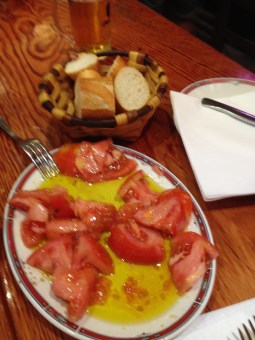
The first thing you will see is the most gorgeous hunk of meat you have ever laid eyes on. Amazing, sea salt-coated slabs of chuleta de buey (a bone-in local grass-fed ribsteak), steaming and spitting on their flatiron grills. They don’t ask you what temperature to cook it. They already know what’s best: sizzling medium rare, with an emphasis on the rare. Whatever alchemy Nestor has wrought; the incantations you will never learn. Just be happy he lets you enjoy the fruits of his magical labors. The tomatoes come crudely sliced into uneven hunks, coated with olive oil, and generously heaped with more sea salt. The peppers are fried and deliver only light heat every seventh pepper, or so the local grandmothers will tell you.
Tomates!
Nestor won’t discuss opening another restaurant or expanding the one he has. Believe me, I tried. He laughed heartily at the suggestion that he open a spot in Washington or New York, waiving his finger and shaking his head all the while. Whatever else you do while visiting San Sebastián, do yourself a huge favor and just go here. The staff is magnificently friendly (particularly for Spanish speakers) and you will not be met with a bewildering array of choices: just an amazing steak, cooked perfectly. Get the tomatoes and, if you’re hungry enough, get the peppers. You can thank me later.
Address: Bar Nestor, Pescadería no. 11, San Sebastián-Donostia, Spain
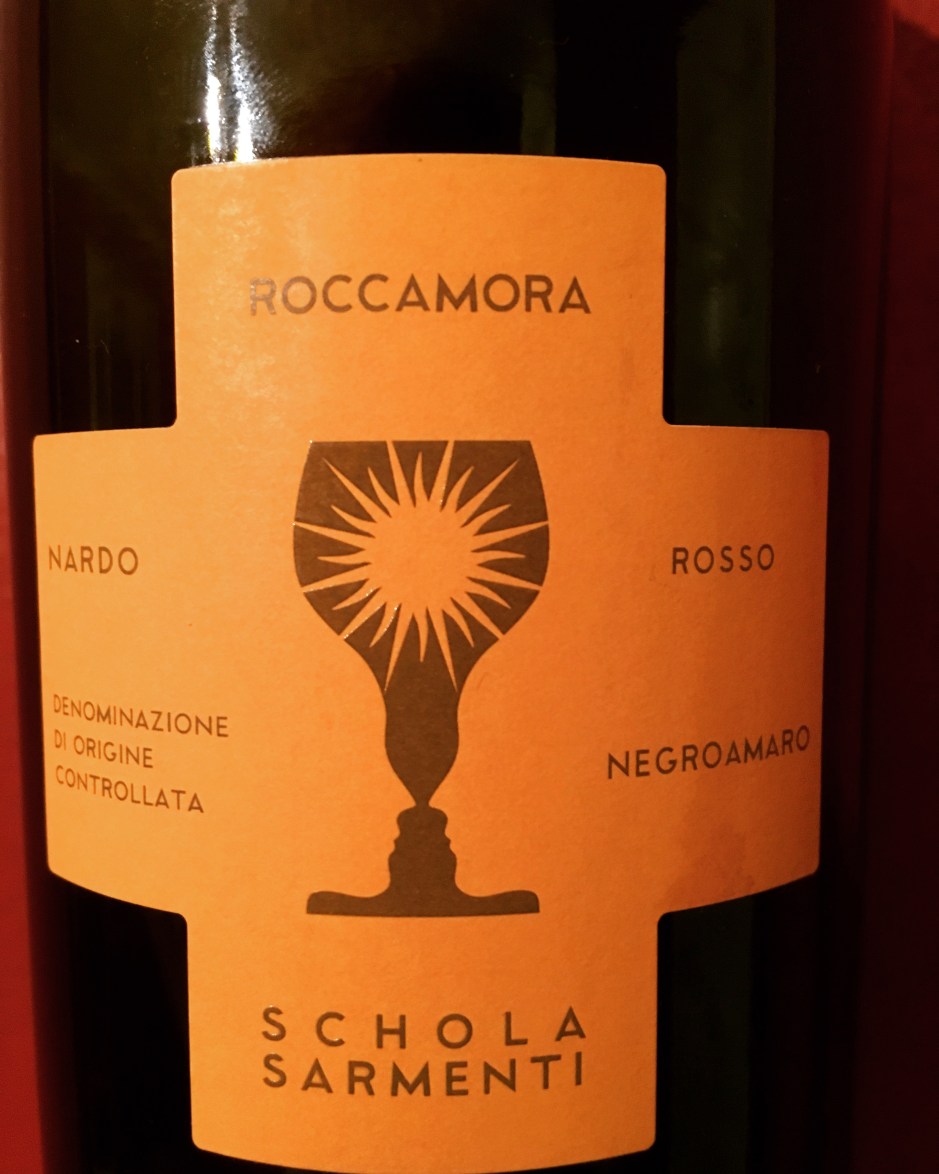
The nose here is like black rubber, cherry, and roses, with a faint hint of leather. What a start. The front end is juicy, with red berries. Then something happens in the mid palate – it turns velvety and smooth, making the whole mouth feel coated with velvety iodine. Yeah, it’s different. The leather and red fruits melt into darker, chewy dried fruits (think prunes, dates, and currant), joined by a salty minerality. The finish carries a slight hint of sweeter amaros such as Nardini or Nonino, and a soft hit of white pepper. Such a fascinating wine. I picked this one up at Appellation Wine & Spirits in the Meatpacking District of Manhattan on the owner Scott’s recommendation.
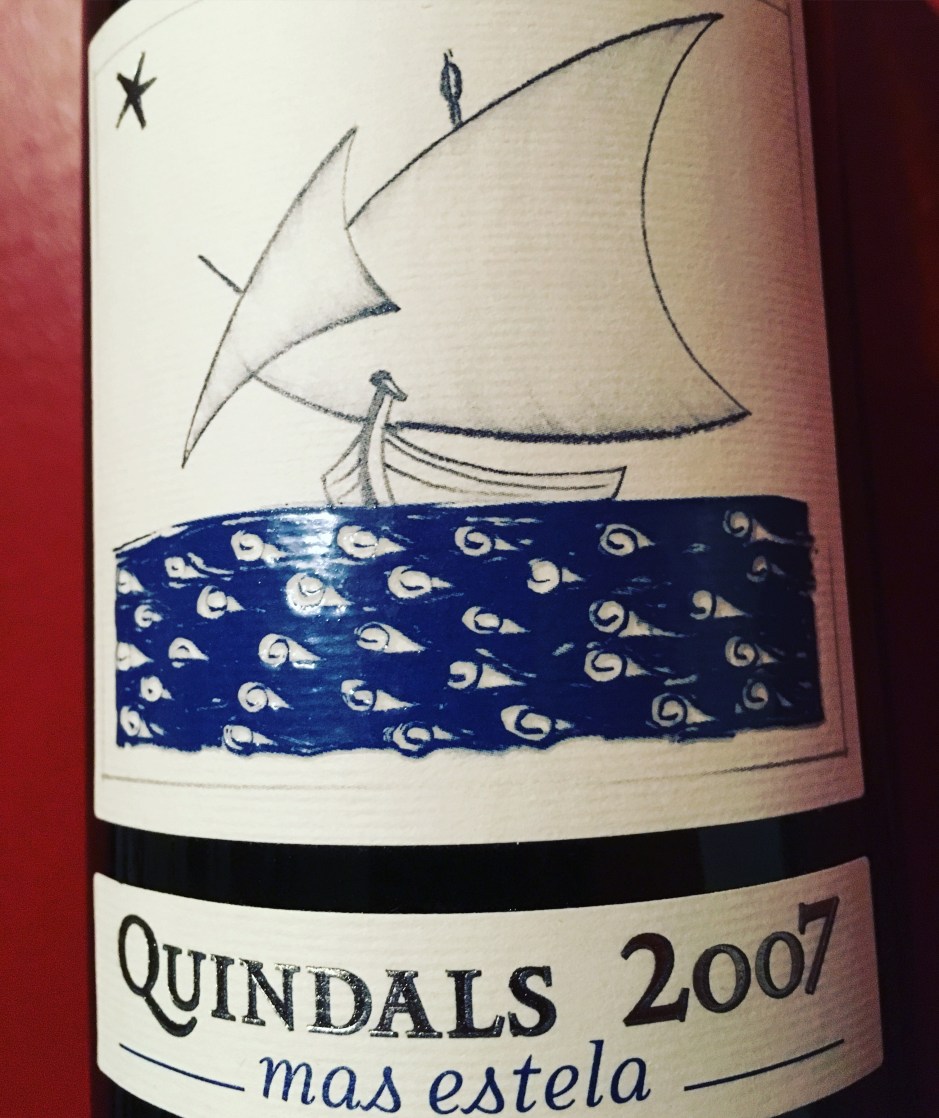
Powerful blackberry, bordering on blueberry, and slight woodiness notes on the nose. Violets, black pepper, and powerful charcoal and black rubber notes on the palate. Muscular, typically Catalan, tannins keep the powerful flavors all honest. Dark chocolate and roses come on in a soft shift from the rubber and charcoal. Tannins are chewy, raisiny, almost like cherry chewing gum. This is a wine that will teach you why the Catalans call red wine “black wine” – so dark that only words like black-red can describe it. I picked this beauty up at Calvert Woodley simply because it was from Empordá for about $20.
In brief, this blog is not exactly meant for you. This is a way for the authors to share recommendations with each other and with their friends. Since meeting at language school in Rio de Janeiro, Brasil in the summer of 2005, Nathan and Sheridan kept in touch through their respective graduate school years, sharing notes on everything from economics to wine, from relationships to navigating Washington DC’s shark-infested career waters. More recently, their shared passion for wine has led to budding wine-related projects, including planting a couple of rows of Barbera in Nathan’s backyard and making wine (to be clear, Nathan makes it, Sheridan helps drink it). After years of struggling to keep up with their own tasting notes, while fielding countless friends’ desperate text messages from wine stores and markets asking for beverage recommendations or that special recipe to impress the new love interest, Nathan and Sheridan created this blog to capture their developing tastes and recommendations for friends to enjoy . . . and the two of them to remember.
If you don’t know Nathan or Sheridan, this blog might help you navigate wine shops and restaurants in a better way than crowd-sourced options: a quick browse through the content will give you a sense of how your own tastes compare to theirs, whether these guys really know what they’re blathering on about, and, thus, whether you can rely on their recommendations. With no journalistic aspirations in play, hopefully they’ll free the reviews from the self-absorbed bloviating found on most crowd sourced options and keep things straight, to the point, and useful.
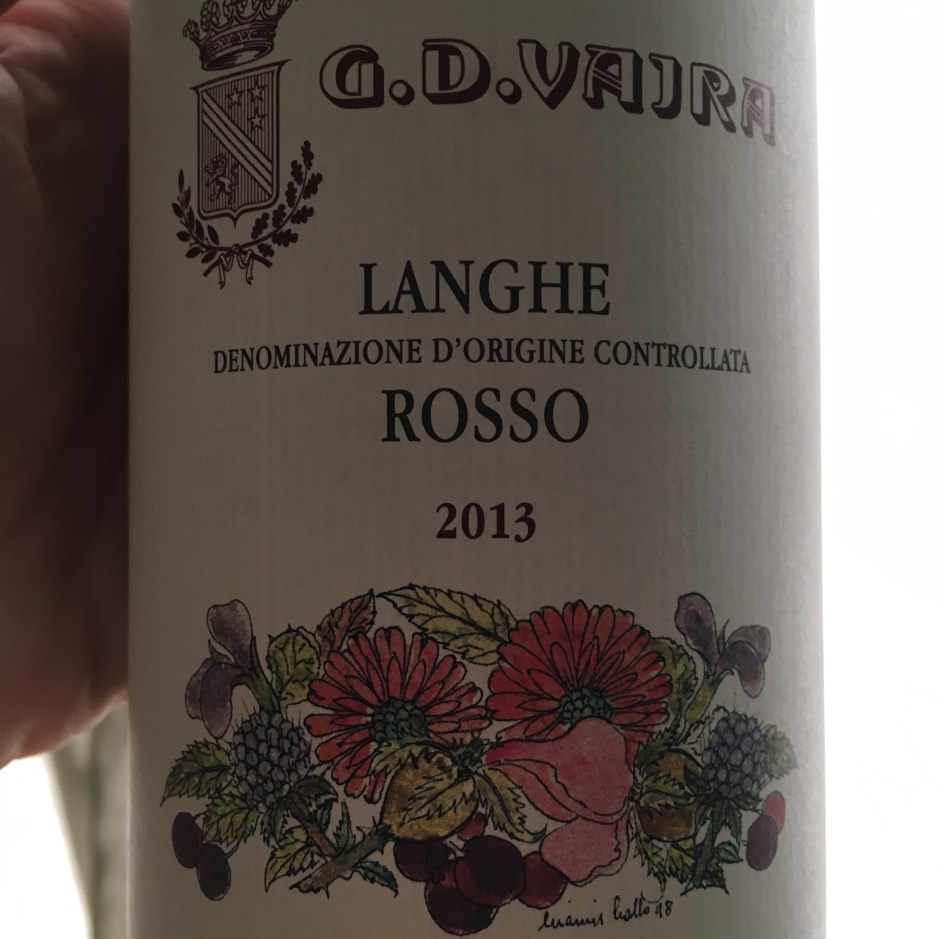
Dolcetto, Nebbiolo, Barbera, Freisa, Pinot Noir, and Albarossa. Violet and mineral notes on the nose with just a hint of autumn mustiness. Fresh cherry, plum, and florals attack the palate on the front end, rounding quickly with brief tannins and a longer greenish mineral finish. This is a bright, acidic red just right for the onset of spring. I would call it light bodied, if not for some stubborn tannins on the backend that provide some depth and backbone. With toast and goat cheese, it’s stellar and I could not imagine a better foil. I picked this one up at Calvert Woodley for $16 on Mark’s recommendation. Verdict: Everyday Red.
Rating: Everyday Red
Name: Langhe DOC Rosso 2013
Winery: G.D. Vajra
Region: Piedmont
Country: Italy
Varietals: Nebbiolo, Dolcetto, and Barbera blended with small quantities of Albarossa, Freisa and Pinot Noir
Price: $16
Where to Buy: Calvert Woodley, 4339 Connecticut Ave NW, Washington, DC 20008
Mazuelo, Garnacha, and Syrah. A powerful iteration of the Montsant DO. It comes on strong with bursting black fruit, currant, rose petals, and leather flavors and a full mouthfeel. The tannins are slighter than most Catalan wines, but present enough to provide some structure. Strawberry and flint notes on the nose are subtle, with everything stretching out into a nice, warm peppery finish. This is a great Everyday Red at $13-16 at your local Whole Foods.
I’m not a fan of the California wine makers who try to make every red grape they produce into an in-your-face, high alchohol, meaty, power-hungry Cabernet Sauvignon. And I find it particularly off-putting when they do this to Pinot Noir, which is such a delicate varietal.
That being noted, this Pinot from Etude is perhaps the one exception. First things first, do not buy this wine if you are hoping to drink what is supposed to be a Pinot Noir. It is much more full-bodied and lucious than a Pinot, but it stops before over-reaching into Cabernet territory. It has a spicy earthiness that tastes more like a Zinfandel to me, but maintains its softness like a Pinot should.
I am quite partial to the wines of Santa Barbara, so I’m not surprised that this Pinot in disguise hits the mark for me. Overall verdict = impressive.
100% Baga. A traditionally fermented Portuguese table wine, fermented in clay ancas with traditional maceration (i.e. trodden). Crushed cherries and violets on the nose. Chocolaty, velvety body with red fruit and a hint of vanilla flavors. Tough, Portuguese tannins give it a lot of structure. Faint slate and coffee notes on the finish. I picked this up at Brooklyn Wine Exchange for around $35-40. Solid, but I won’t buy it again at that price point. The M2, which we drank along with it, kicked its ass thoroughly. In fact, this wine and its Robert Parker 92 point rating is the poster child for why I started this blog: meaningless ratings by people who have sold their name to producers.
Rating: Impressive
Name: 2009 Baga
Winery: Sidónio de Sousa
Region: Bairrada
Country: Portugal
Varietals: 100% Baga
Price: $35-40
Where to Buy: Brooklyn Wine Exchange, 138 Court St, Brooklyn, NY 11201
The nose smells exactly like blackberries. Blackberries. Like blackberry pie. It evens out a bit with some slate and vanilla notes as it opens. A luscious, voluptuous and generous wine. Strong, percolating vanilla, black fruit, and salty stone notes and a great mouthfeel. The tannins pull together in just the right way, at just the right time. It is amazing with pata negra jamón and valdeon cheese. I picked this one up in San Sebastián and am so glad I did. Just a lovely wine. For around 20-25 euros – I will find this one again.



 Mazuelo, Garnacha, and Syrah. A powerful iteration of the Montsant DO. It comes on strong with bursting black fruit, currant, rose petals, and leather flavors and a full mouthfeel. The tannins are slighter than most Catalan wines, but present enough to provide some structure. Strawberry and flint notes on the nose are subtle, with everything stretching out into a nice, warm peppery finish. This is a great Everyday Red at $13-16 at your local Whole Foods.
 I’m not a fan of the California wine makers who try to make every red grape they produce into an in-your-face, high alchohol, meaty, power-hungry Cabernet Sauvignon. And I find it particularly off-putting when they do this to Pinot Noir, which is such a delicate varietal.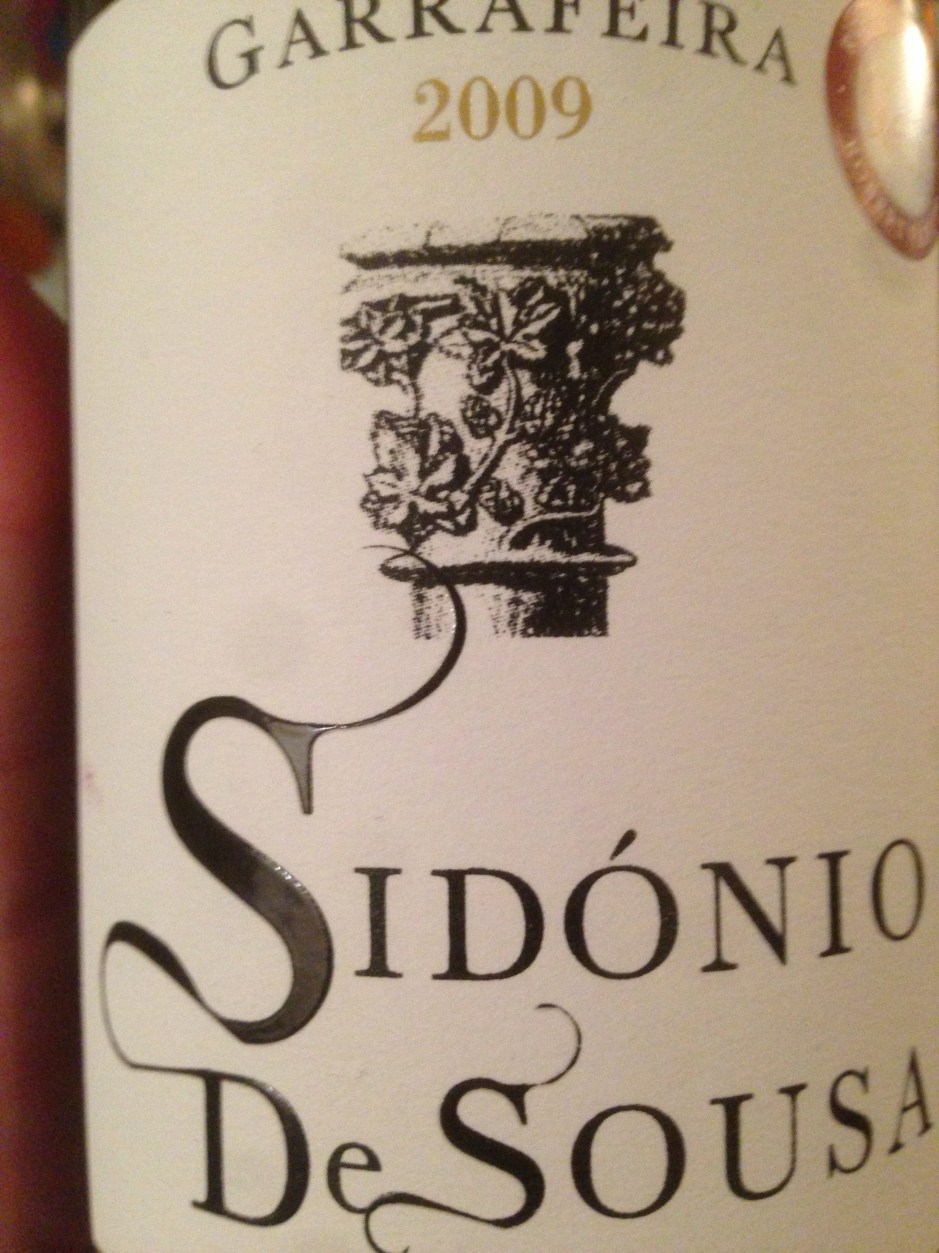
 The nose smells exactly like blackberries. Blackberries. Like blackberry pie. It evens out a bit with some slate and vanilla notes as it opens. A luscious, voluptuous and generous wine. Strong, percolating vanilla, black fruit, and salty stone notes and a great mouthfeel. The tannins pull together in just the right way, at just the right time. It is amazing with pata negra jamón and valdeon cheese. I picked this one up in San Sebastián and am so glad I did. Just a lovely wine. For around 20-25 euros – I will find this one again.
 Posto Novo